
Dolby Atmos Home Theatre in a Mumbai Apartment: How We Handle Low Ceilings, Glass Walls and Tight Spaces
Most of the home theatres we design in Mumbai are not in basements or purpose-built cinema rooms. They go into apartments: a spare bedroom in a Lower Parel tower, a living room in Bandra, a den with a false ceiling that leaves only a few inches for anything above it.
That is not a reason to give up on Dolby Atmos. It is a reason to design carefully. Over 16+ years and 1,000+ projects, more than 100 of them in Mumbai, we have learnt that the limits of a flat rarely rule out a great system. Instead, they decide which speakers go where, how the room is treated and where the equipment hides.
Here are the seven challenges we meet most often when building a home theatre in a Mumbai flat, and how we deal with each one.
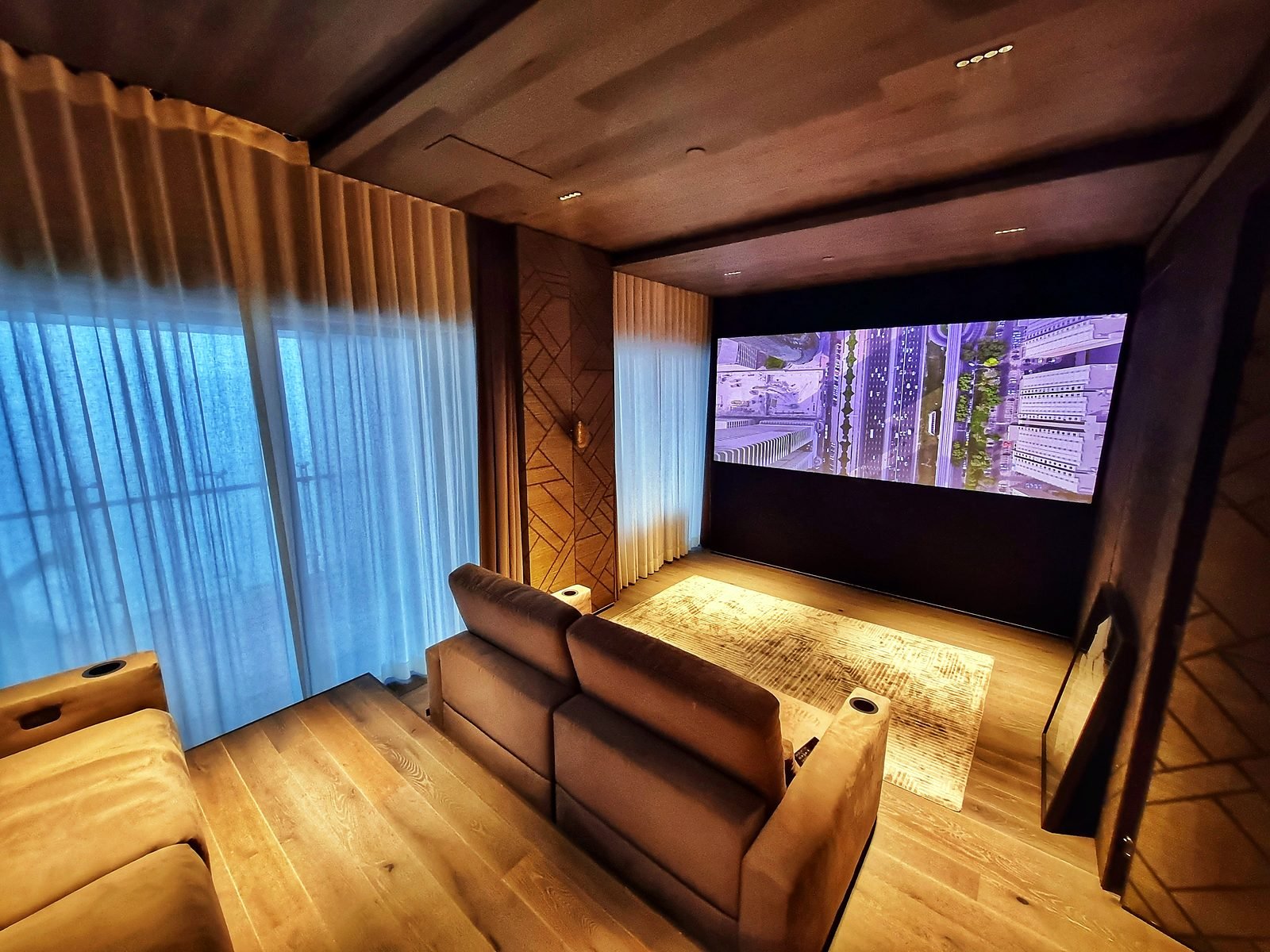
1. Low Ceilings and Atmos Height Speakers
Dolby Atmos, like DTS:X and Auro-3D (we design for all three), adds a height layer. Speakers above the seats place rain, aircraft and ambience overhead. Those speakers need to sit at the right angles to the listener. Under a low ceiling your head is closer to them, so a poorly chosen or badly aimed speaker sounds like one bright spot rather than a sense of space.
How we handle it:
- Flush in-ceiling speakers fitted into the false ceiling, chosen for wide, even dispersion so the overhead effect stays smooth at close range.
- Positions planned from the seating, not from the ceiling grid or the lighting layout.
- Early coordination with your interior designer, so speaker cut-outs, AC ducts and lights do not compete for the same few inches of ceiling.
- The right layout for the room. A compact room is often better served by fewer, well-placed height speakers than by forcing in more channels than it can support.
2. Glass Walls and Large Windows
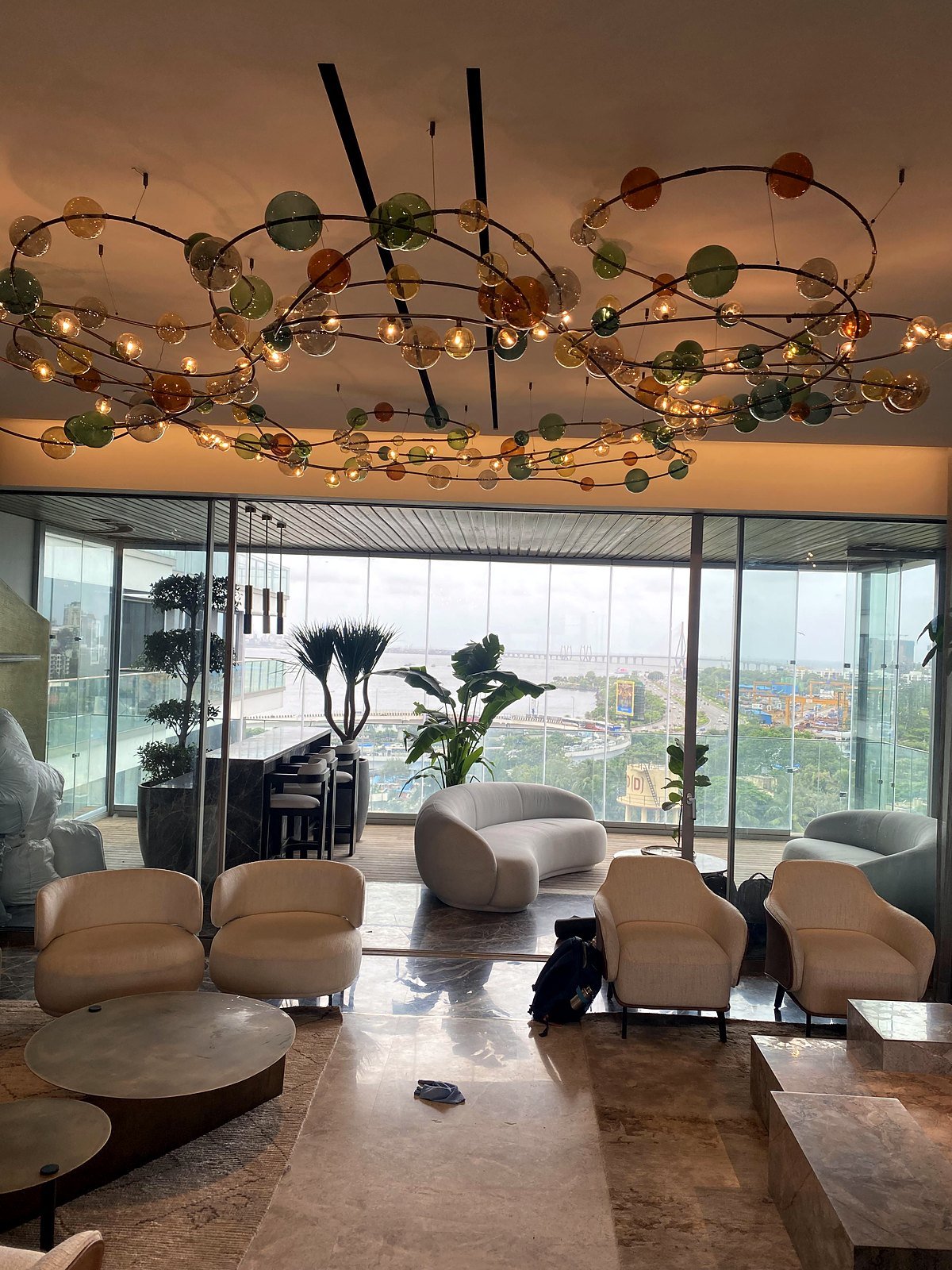
Mumbai’s towers love floor-to-ceiling glass. Sound does not. Glass is hard and smooth, so it reflects most of the sound that hits it. Strong reflections from a glass wall blur dialogue, smear the placement of effects and make the room harsh as the volume rises.
How we handle it:
- Heavy, full-height curtains are the simplest fix and often the most elegant: closed for a film, open for the view.
- Soft furnishings and acoustic panels. Upholstered seating, a thick rug and fabric-wrapped panels on the side walls absorb much of what the glass would otherwise bounce back.
- Motorised curtains in a single “movie” scene, so one button dims the lights and closes the drapes. In a Cuffe Parade apartment, main and sheer curtains in the living room, dining room, bedrooms and den are all automated as part of a Savant and KNX system. Our smart home automation page explains how this works across a whole home.
3. Daylight, Projectors and Screens
Glass also lets in daylight. A projector paints light onto a screen, so ambient light washes out its blacks and colours. A large TV copes with a bright room far better.
How we decide:
- A large TV suits a bright living room that is used mostly during the day.
- A projector with blackout curtains suits a room used mainly in the evening, where you want a genuinely big picture.
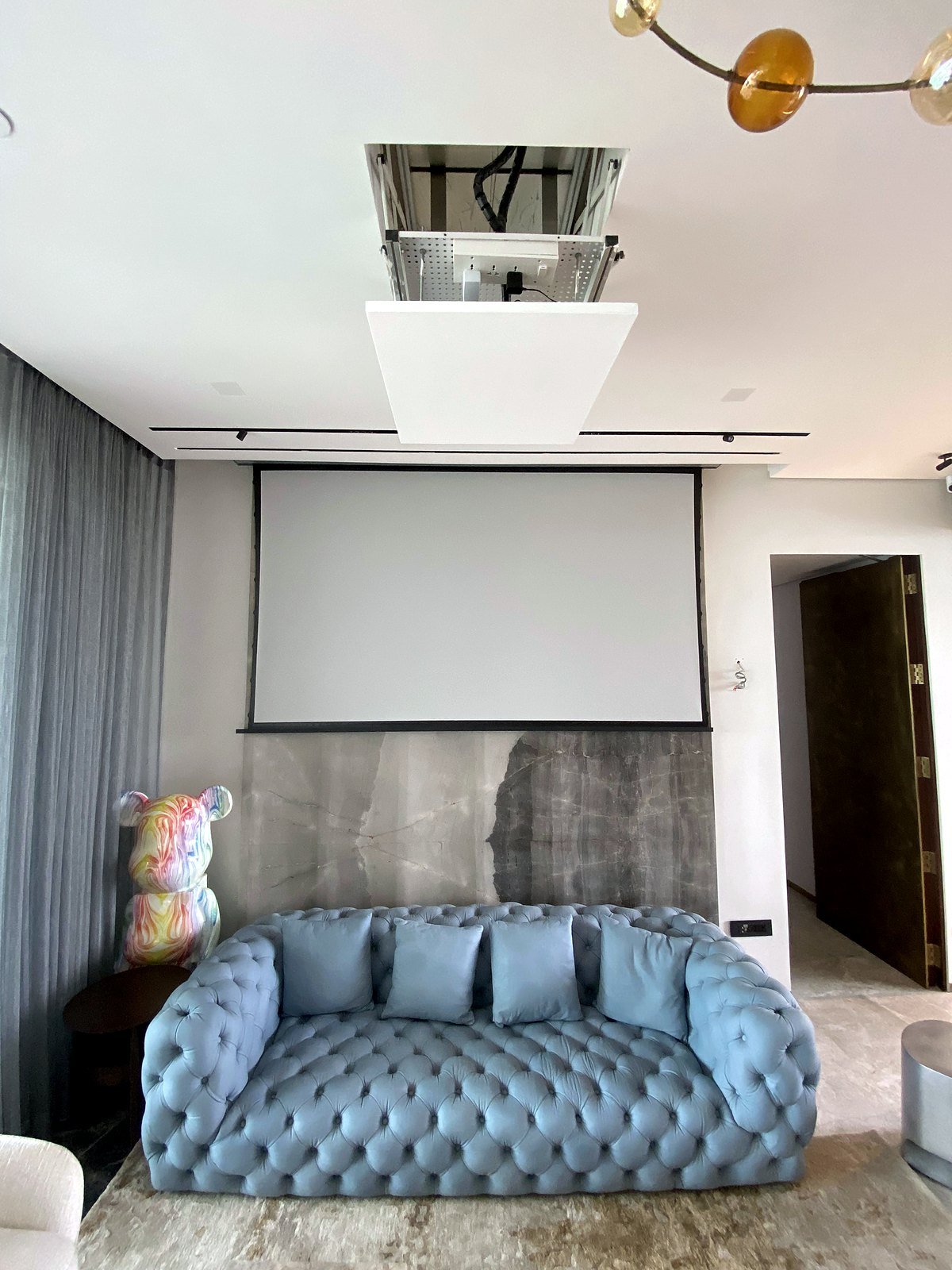
- A projector with a screen material made for rooms that are not fully dark is the middle path. In a Bandra apartment we paired an Optoma true-4K ultra-short-throw projector with a 120-inch motorised Screen Innovations screen in its grey Slate material.
4. Tight Floor Space
Floor-standing speakers and large subwoofers take up space a flat cannot spare, especially in a living room already shared with sofas and storage.
How we handle it:
- In-wall and in-ceiling speakers where floor space is tight, so the room looks like a living room, not an equipment showroom.
- Subwoofers built into the ceiling, walls or joinery instead of boxes in the corners.
- Equipment that disappears. A projector lift lowers the projector from the ceiling only when you need it, and a motorised screen rolls away afterwards. The Bandra living room uses exactly this: a ceiling projector lift, four in-ceiling speakers and two in-ceiling subwoofers, with almost nothing on show when it is off.
5. Bass, Neighbours and Shared Walls
Low frequencies pass through concrete slabs and shared walls far more easily than voices and treble do. So there are two jobs: getting clean, even bass at your seats, and keeping it from reaching the flat next door.
How we handle it:
- More than one subwoofer. A single sub creates strong peaks and dips around the room. Several subs, placed carefully, even this out, so you get the same impact at a lower overall level. The dedicated theatre in a Lower Parel high-rise has four subwoofers: two in the front wall and two in the rear wall.
- Tight, controlled subwoofers. As Authorized Distributor for Rythmik Audio, we often use its Direct Servo subwoofers, which are designed for low distortion: impact rather than boom. A Rythmik L12 handles the bass in the Cuffe Parade living room.
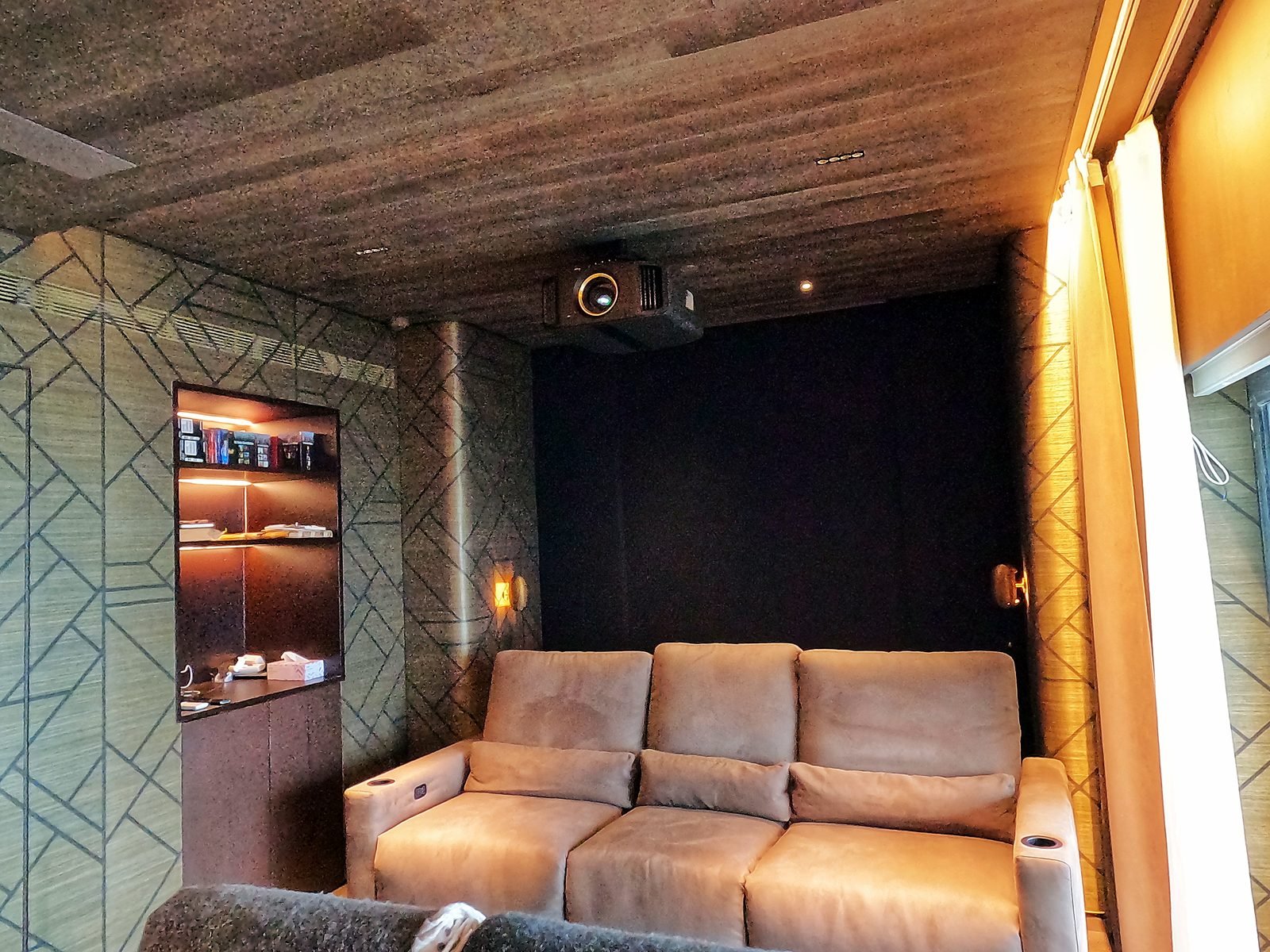
- Proper isolation in a dedicated room. The Lower Parel theatre’s walls were built with isolation clips and channels, glass wool, Green Glue and double layers of gypsum and MDF, with an STC 45 rated door.
6. Untreated Rooms and Room Correction
Many media rooms in flats double as living spaces, so full acoustic treatment is not always practical, and every room colours the sound in ways furniture alone cannot fix.
How we handle it:
- Room correction. A measurement microphone captures how the room alters the sound at each seat, and the processor corrects it. miniDSP processors with Dirac Live (Avenue Sound is Authorized Distributor for miniDSP) bring this to systems of almost any size.
- Calibration by our own team. We are certified for HAA audio calibration and ISF video calibration, and we calibrate every system ourselves. At the Lower Parel theatre that meant Dirac room correction for the sound and CalMAN colour calibration for both SDR and HDR pictures.
7. Hiding Equipment Without Cooking It
Racks of amplifiers and processors usually end up inside a wardrobe or a joinery unit. Closed cupboards trap heat, and electronics that run hot run shorter lives.
How we handle it:
- Active cooling. We are an Authorized Dealer for AC Infinity, whose quiet fans keep enclosed racks cool. The 35U racks in both the Lower Parel and Bandra projects use AC Infinity fans.
- One remote or app for everything. In Lower Parel, one touch on the Savant remote picks a source and powers up the projector and equipment, and the screen can be raised or lowered from the same remote so two-line subtitles stay visible.
What We’ve Done in Real Mumbai Homes
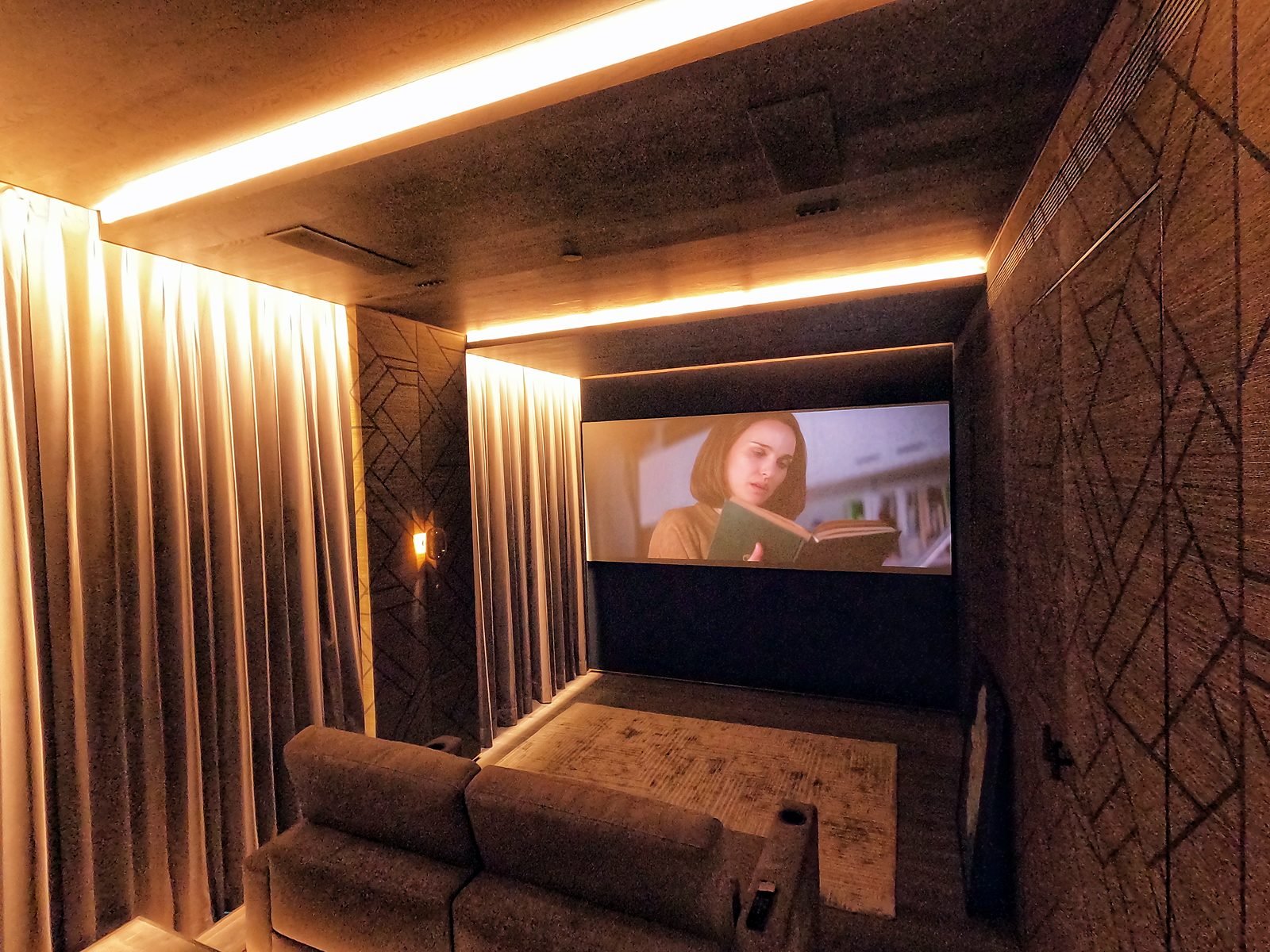
A Lodha high-rise in Lower Parel. A dedicated 7.4 home theatre with a JVC 4K projector, a 129-inch screen and a Lumagen Radiance Pro video processor. Four subwoofers sit in the front and rear walls. The room is fully isolated, with fabric-finished walls on rubber isolation pads, a ceiling diffuser and an STC 45 door, and calibrated with Dirac and CalMAN. See the Lower Parel home theatre project.
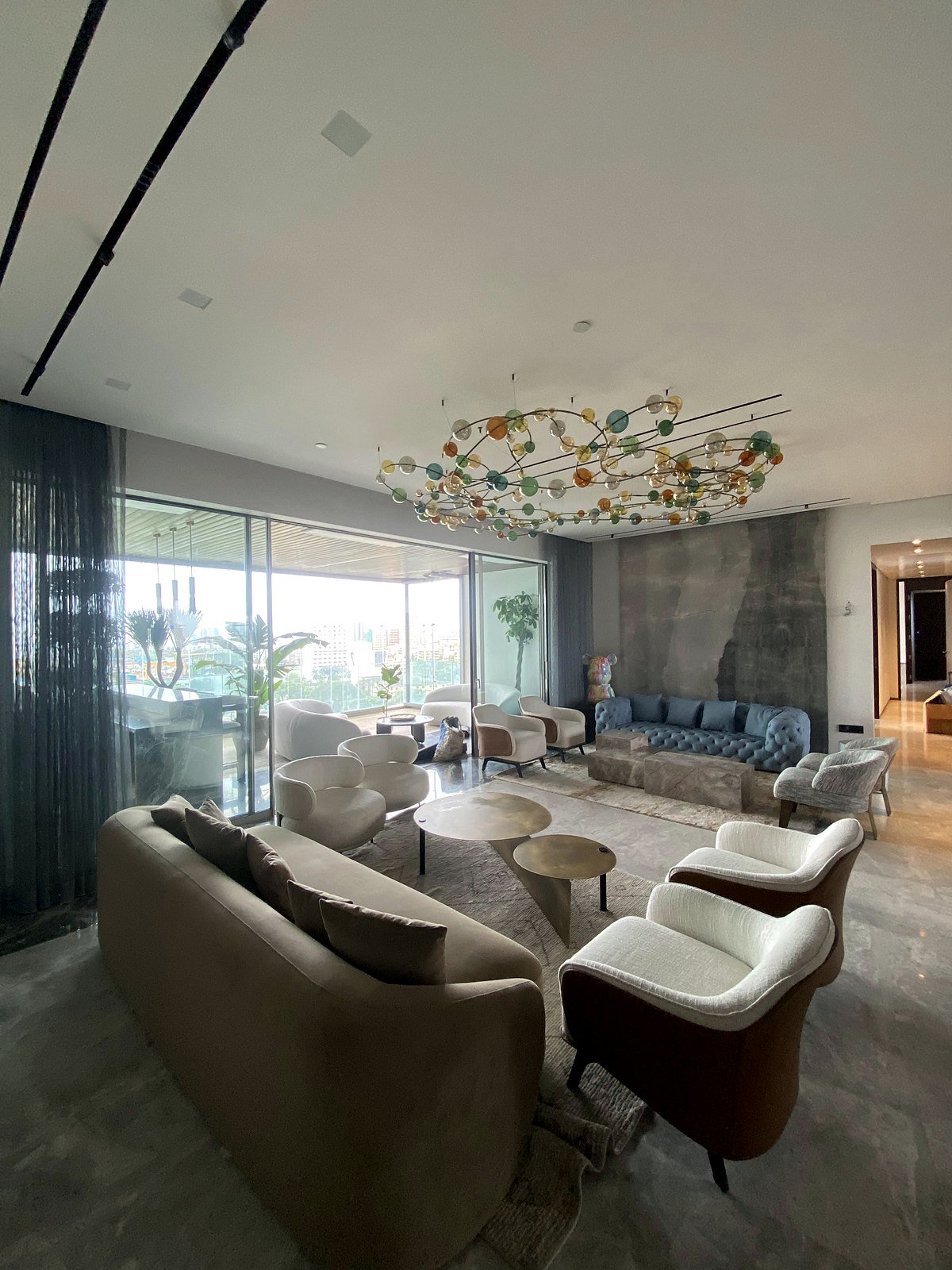
A Bandra apartment. A living-room cinema that vanishes when not in use: an Optoma true-4K ultra-short-throw projector on a ceiling lift, a 120-inch motorised Screen Innovations screen, four in-ceiling speakers and two in-ceiling subwoofers, plus a balcony music zone. Savant and KNX run the lighting, curtains and AC. See the Bandra smart home project.
A Cuffe Parade apartment. Gray Sound in-ceiling speakers and a Rythmik L12 subwoofer in the living room, motorised main and sheer curtains in the main rooms, and full Savant and KNX control. See the Cuffe Parade home automation project.
Hear It First at Seawoods
At our Seawoods Experience Centre in Navi Mumbai you can sit in a dedicated 5.2 home theatre room with a projector, a large screen, recliner seating and acoustic treatment, then see smart lighting, smart security and a smart conference room in action.
Hours: Weekdays 10:30 am to 7:30 pm; weekends by appointment
Call or WhatsApp: +91 91373 94778
Home theatres start from ₹3 lakh. For layouts, budgets and how we work across the city, see our guide to home theatre in Mumbai.
Frequently Asked Questions
Can I have Dolby Atmos in a Mumbai flat with a low false ceiling?
Yes. Flush in-ceiling speakers with wide dispersion, placed according to where you sit, work well under low ceilings. We plan the ceiling with your interior designer early so speakers, lights and AC ducts fit together.
Do I need a dedicated room, or can my living room work?
Both work. A dedicated room gives the most control over light and sound. A living room can still deliver an excellent result with in-ceiling speakers, a hidden projector lift or a large TV, motorised curtains and room correction.
Will my neighbours hear the bass?
Bass travels through concrete more easily than other sound, so we plan for it. Several well-placed subwoofers give impact at lower levels, controlled subwoofers reduce boom, and a dedicated room can be fully isolated.
How long does a home theatre installation take?
Typically 2 to 8 weeks, depending on the scope and how much civil and interior work the room needs.
Can I hear a system before I decide?
Yes. Visit our Seawoods Experience Centre on a weekday between 10:30 am and 7:30 pm, or book a weekend appointment on +91 91373 94778.